
Article sections
You have a name. You like it. You sent it to the WhatsApp group with five friends, and they replied with “It’s great!” or “Sounds good!” You assume the name is ready. You rush to buy the domain and print business cards.
That still doesn’t validate the name.
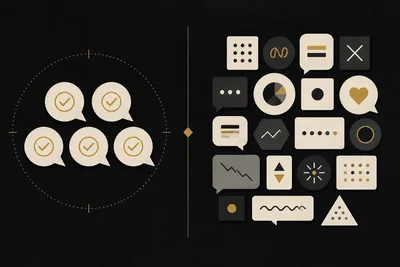
Friends give social approval, not market validation
Those five friends aren’t showing you how potential customers will perceive your brand. They’re giving you social validation. Someone who knows you will react very differently from someone who might buy your product. Friends want to support you. They don’t want to tell you the name sounds like a 90s cleaning company or that it’s hard to pronounce. They don’t want to hurt you.
A dentist doesn’t ask his family if the waiting room feels welcoming. He knows they’ll say “yes” because they love him. Instead, he asks the patient who walked into the clinic for the first time and felt intimidated by the decor. Customers judge a name by the impression it makes.
| Feedback from friends | Feedback from strangers (the market) |
|---|---|
| Based on affection | Based on neutral perception |
| Filters out negativity to avoid offending | Exposes weaknesses immediately |
| Assumes they know what you mean | Has no context, sees only the result |
| Confirms your bias | Tests your business hypothesis |
The shared-context trap
People who know you fill in the gaps when you show them a brand name. They already know who you are, what you stand for, and what you want to do with your business. If the name is vague, they’ll find meaning in it because they have access to your internal context.
Your customer doesn’t have that context.
A bartender names a new cocktail “The Taste Blend.” His friend will say it’s creative because he knows the bartender studied mixology. The customer at the bar will look at the menu and think it’s a pretentious name that tells him nothing about the flavor.
If the name needs an explanation, customers won’t understand it quickly. The name should make sense on its own. Since the customer doesn’t know your history, ambitions, or reasons behind the choice, they’ll judge the name based on the first few seconds of interaction. They won’t try to “guess” what you meant to say. If they don’t get it right away, they won’t search for its meaning.
How to measure if a name works
Show the name to people who don’t know you and ask what they take from it. Check three things:
1. The Spelling Test Say the name out loud. Ask the person to write it on a piece of paper. If they spell it three different ways, The spelling is too inconsistent. In retail or services, if the customer can’t figure out how to spell your name in Google, they won’t find you. A name customers cannot spell is hard to find online.
2. Free association Ask: “When you hear this name, what comes to mind?” If the person answers “I don’t know” or “Sounds like something IT-related” (when you’re selling artisan bread), the name doesn’t fit your product.
3. The Volume Test A name needs to roll off the tongue quickly in a conversation. If someone pauses to pronounce it or has to repeat it, the conversation becomes harder to follow.
The risk of false validation
Testing on friends can make you believe the name works, even though you haven’t checked the market’s reaction. You feel validated. So you invest in a logo, signage, and marketing. When you finally hit the market and notice people stumbling over the name or that it leaves people feeling nothing, changing it will cost you.
You can change a Word file in 10 seconds. Changing a neon sign on your storefront after six months? That costs a lot more. Get feedback from strangers before buying the domain, printing signage, or investing in marketing.
What to do instead of the WhatsApp group
Find people who match your customer profile but have no connection to you. This could be someone from a different community, a former colleague you no longer talk to, or even a stranger on a specialized forum.
Ask what the name means to them. Don’t ask “Do you like it?” Ask “Based only on the name, what do you think this company sells?”
If the answers match your positioning, keep the name. If they don’t, you find out now, when you’re only losing a document, rather than later, when you’re losing customers.
Before you approve the name, test it with people who resemble your target customer and ask what they think you’re selling, not if they like it. Note the responses you hear most often. Change the name if the responses don’t connect with the positioning you want to own.